This text is for alignment. This text is for alignment. This text is for alignment. This text is for alignment. This text is for alignment. This text is for alignment. This text is for alignment. This text is for alignment. This text is for alignment. This text is for alignment. This text is for alignment. This text is for alignment. This text is for alignment. This text is for alignment. This text is for alignment. This text is for alignment. This text is for alignment. This text is for alignment. This text is for alignment. This text is for alignment. This text is for alignment.
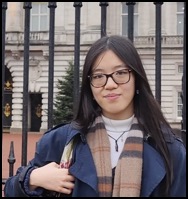
Yaxin’s research focus on characterizing the transition of IDPs from monomers to oligomers and the subsequent formation of phase-separated droplets. Studying oligomers separately could potentially reveal mechanisms by which IDP transitions through distinct states—from monomers to oligomers to phase-separated droplets—providing insights into the control points of LLPS and aggregation.
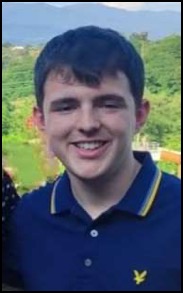
In his part II research project Ben investigated the properties of phase separated protein droplets, and used NMR techniques to do this. Outside of the research, he plays for Oxford Universities Quadball Club. We are happy that Ben decided to stay on for his Dphil!
This text is for alignment. This text is for alignment. This text is for alignment. This text is for alignment. This text is for alignment. This text is for alignment. This text is for alignment. This text is for alignment. This text is for alignment. This text is for alignment. This text is for alignment. This text is for alignment. This text is for alignment. This text is for alignment. This text is for alignment. This text is for alignment. This text is for alignment. This text is for alignment. This text is for alignment. This text is for alignment. This text is for alignment. ment. This text is for alignment. This text is for alignment. This text is for alignment. This text is for alignment. This text is for alignment. This text is for alignment. This text is for alignment. This text is for alignment. This text is for alignment. This text is for alignment. This text is for alignment. This text is for alignment. This text is for alignment. This text is for alignment. This text is for alignment. This text is for alignment. This text is for alignment. This text is for alignment. This text is for alignment. This text is for alignment.
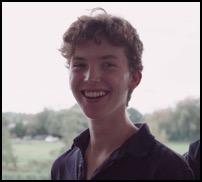
Morgan is a DPhil student interested in the interactions between disordered proteins and small molecules. Due to the large conformational ensemble exhibited by disordered proteins, characterisation of disordered protein-ligand complexes by classical techniques such as electron-microscopy and crystallography are more challenging, whereas NMR is an ensemble technique ideal for characterising these interactions. Morgan uses Saturation Transfer Difference (STD) NMR to study these interactions, with a particular interest in disordered proteins with roles in neurodegenerative disease, such as ɑ-synuclein and tau, and their interactions with neurotransmitters and aggregation inhibitors. Identifying these complexes expands our understanding of biochemistry and helps towards finding preventative treatments for neurodegenerative diseases. In his spare time, Morgan enjoys baking bread and writing/recording music.
This text is for alignment. This text is for alignment. This text is for alignment. This text is for alignment. This text is for alignment. This text is for alignment. This text is for alignment.
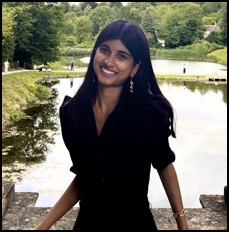
Suzanne was a Part II and is excited about all things NMR! She will soon start her Dphil at the Rosalind Franklin Institute in cooperation with the Baldwin group. When not at her desk, she can be found at the climbing gym, or knitting/crocheting her next fibre arts project.
This text is for alignment. This text is for alignment. This text is for alignment. This text is for alignment. This text is for alignment. This text is for alignment. This text is for alignment. This text is for alignment. Jack Bercovici is a fourth-year DPhil between the Davis Group at the Rosalind Franklin Institute and the Baldwin Group at the University of Oxford. He completed his BSc in Chemistry at the University of Bristol, having also studied for a qualification in Law at the same institution. His doctoral project focuses on developing a photochemical method of controlling phase separation within cells, utilising chemical biology approaches. With Dr Turner, he also works on developing methods to push the boundaries of existing NMR hardware using Seedless optimal control pulses which has led to him taking on a role as a part-time NMR technician at the RFI alongside his DPhil.
Outside of the lab, Jack is an accomplished writer-director (and occasional performer and producer), having worked with both the Bristol Revunions and the Oxford Revue (as president of both societies), as well as AD on a production Chekhov's The Cherry Orchard at the Oxford Playhouse. He is a satirist, who has ended up at lunch with Stephen Fry, the theatre with Damien Lewis and Ralph Fiennes, and the pub with John Finnemore. He also occasionally dabbles in piano and saxophone when he can find the time.
Minal is a DPhil student jointly supervised by Andrew and other supervisors within the Rosalind Franklin Institute and Imperial College London. Her research focuses on developing cold argon plasma (CAP)-based fragmentation and modification methods to study protein structure using mass spectrometry and NMR spectroscopy. The project aims to identify unique plasma-induced molecular signatures that can distinguish disease from non-disease states, specifically, differentiating EGFR mutations in lung cancer. This is with the intention to understand, at a mechanistic level, how CAP alters protein structure and chemistry.
Outside of research, Minal is the current Treasurer and Secretary of our very own Catalyst Society (OxGrad Chem Soc)!
Tasfia is a Part II student at Somerville College with an interest in using NMR spectroscopy to advance our understanding of neurodegenerative diseases. Her project focuses on the behaviour of different tau isoforms in Alzheimer’s disease, and with the aim of uncovering how these isoforms interact with small molecules. She hopes that gaining a deeper understanding of isoform-specific behaviour which hopefully could support the development of targeted therapeutics for Alzheimer’s and other tauopathies in the future.
Beyond her academic work, Tasfia enjoys a variety of craft-based hobbies. She can probably be found knitting and listening to an audiobook.
Tobias has joined the Baldwin group as a Part II student, where he is developing improved saturation pulses to investigate the binding of molecules to disordered proteins. His work aims to advance the study of how therapeutic compounds interact with disordered proteins implicated in neurodegenerative diseases.
Outside the laboratory, Tobias is an active member of the university rowing team and can often be found coxing on the water.
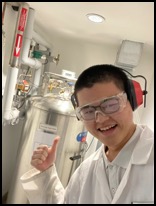
Bowen's NMR research started with designing RF pulses, including a summer project focused on the powerful Seedless program for optimal control. His work has now evolved into characterizing protein interactions and dynamics. Being part of the research group is a genuine source of enjoyment for him.
Beyond the lab, he serves as a dedicated college bell ringer.
Fill text ill text till text till etesx